
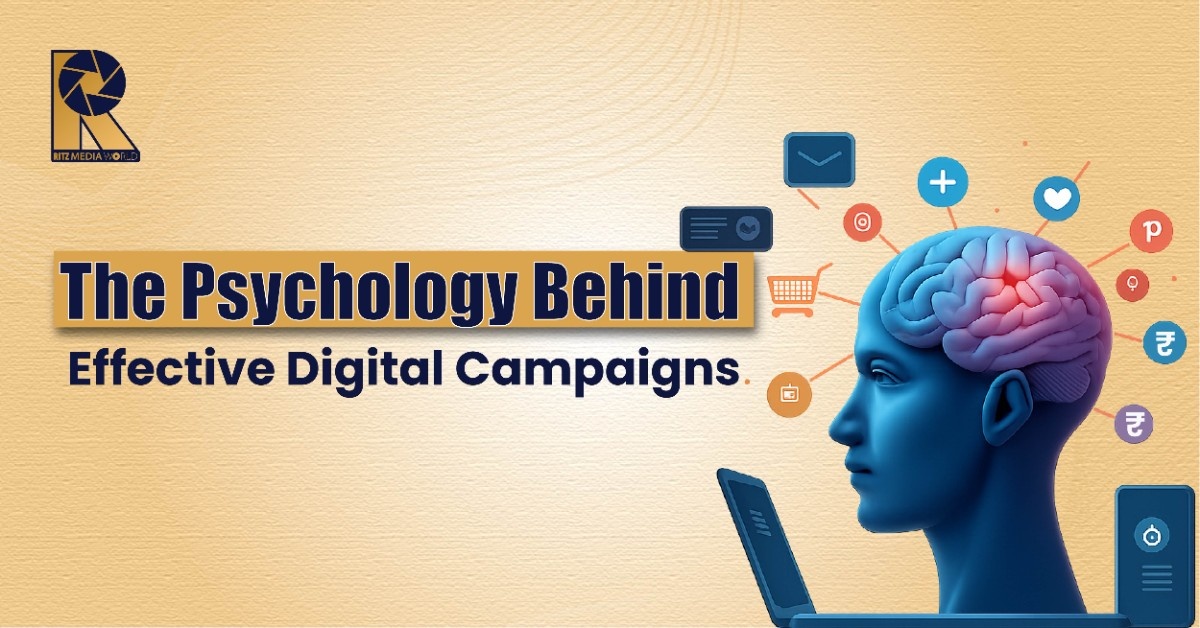
Behind every successful digital marketing campaign is not just strategy, creativity, or analytics but the human mind. The psychology behind digital marketing studies how emotions and behaviour affect consumer responses to marketing messages. It is only when one understands this relationship between human psychology and marketing that brands can craft campaigns that do not only reach people but resonate with them. In today's competitive digital landscape, mastery of consumer psychology in digital marketing is mandatory; it is an imperative. Every click, share, and purchase mirrors how a consumer thinks, feels, and responds. Brands that can align their campaigns to psychological principles have deeper connections with audiences—higher engagement and stronger conversions.
Emotion is the key driver in digital decisions
The most powerful marketing does not sell a product; it sells a feeling. Emotions like joy, trust, excitement, or even fear are what determine how people interact with brands online. Emotional storytelling falls under one of the strongest pillars of marketing psychology When brands can evoke the right emotion, they influence perception as well as behaviour. For instance: happiness may encourage social sharing while nostalgia strengthens brand loyalty and fear of missing out (FOMO) drives fast purchases among many others. Successful brands use emotional triggers in visuals music messaging to make sure their campaigns remain memorable and meaningful.
The Role of Social Proof in Persuasion
People have an inherent tendency to follow the crowd; this is a psychological behaviour known as social proof. In terms of digital marketing psychology, it is this principle that makes testimonials so effective, influencer endorsements so effective and user reviews so effective.
Cognitive Biases and
Purchase behaviour
Consumers do not make rational decisions all the time. Cognitive biases, subtle psychological shortcuts are used to influence their decisions, as they have an impact on their perception of value. These biases in digital marketing consumer psychology can be identified and used to tremendously enhance the performance of the campaign.
There are some typical
examples such as-
1) Anchoring Bias - A higher original price is offered before it is discounted
and the offer seems more valuable.
2) Scarcity Effect - Urgency is induced by limited time offers or out of 2 in stock notices which encourage more immediate actions.
3) Bandwagon Effect - Human beings are inclined to purchase something popular. Emphasizing the trending or most popular products is a capitalization of this instinct.
When applied in an ethical manner, marketers utilizing such psychological triggers can influence customers to act in a specific way without their loss of trust.
Credibility and Trust Makes Conversions
The consumers are becoming cautious in the digital era. One of the
psychological elements that lead to the success of digital campaigns is the
necessity to build trust. Perceived credibility can be achieved through a
visually uncontaminated web site, clear policies and safe payment mechanisms.
Expertly speaking, small design elements, like testimonials, brand
certifications, or even more recognizable badges are a big deal as far as
marketing psychology is concerned. The more credible a brand is, the higher the
chances of a consumer to participate and turn up.
The Underground Power of Colour and Design
The use of colours and design is very emotional and psychologically active
in terms of digital marketing psychology. The colours provoke a varying
reaction, red is an indicator of excitement or urgency, blue is an indicator of
trust and green is an indicator of harmony and growth.
Colour is strategically used by good marketers to control perception and
influence attention. A good digital campaign employs visual psychology to
narrate a story even before even the first word is read.
Conclusion
It is the psychology of digital marketing that can make ordinary campaigns a powerful one. Knowing the relationship between emotions, trust, design, and biases in influencing consumer behaviour, marketers can develop campaigns that attract attention but incite action.
The most effective digital
strategies are not necessarily data-driven, but human-driven. The application
of the consumer psychology concepts to digital marketing enables the brands to
engage the individuals at a personal scale engaging them to become loyal and
maintain a long-term growth.
Essentially, being good at digital marketing psychology is to understand how to
speak to the mind. And when a brand knows how to think of consumers, it is no
longer in need of pursuing attention- attention is an automatic follow up.
Frequently asked questions (FAQs)
1. What does digital
marketing psychology entail?
A: Digital marketing psychology is the science of consumer decision-making and
it is based on human emotions, cognitive bias, and behaviour in the context of
the Internet. It assists the brands in designing campaigns that evoke joy,
trust, FOMO, or urgency to increase engagement and converts.
2. What is the relationship between emotions and the success of digital
marketing?
A: 80% of the purchase decisions are made by emotions. Campaigns that are based
on joy (shareable content), nostalgia (brand loyalty), or FOMO (limited-time
offers) inspire more emotional responses, which results in better click-through
and conversion rates.
3. What is social evidence in online marketing?
A: Social proof consists of the psychological disposition to believe in what
other people are doing. In online marketing, it manifests as customer reviews,
influencer posted messages, testimonials, and 1M+ sold badges, which increase
the credibility and purchases up to 34 percent.
4. What is the nature of FOMO in online campaigns?
A: FOMO (Fear of Missing Out) generates a sense of urgency through words such
as Only 2 lefts or Sale ends in 3 hours. This scarcity rule prompts 69 percent
of buyers to make purchases in a hurry particularly in flash sales in
e-commerce.
5. What is the anchoring bias in marketing?
A: Anchoring bias causes consumers to evaluate value by considering the initial
price. Displaying an original price of $999 and reducing it to $499 will result
in the discount being more appreciated even though 499 may have been the price
the whole time.