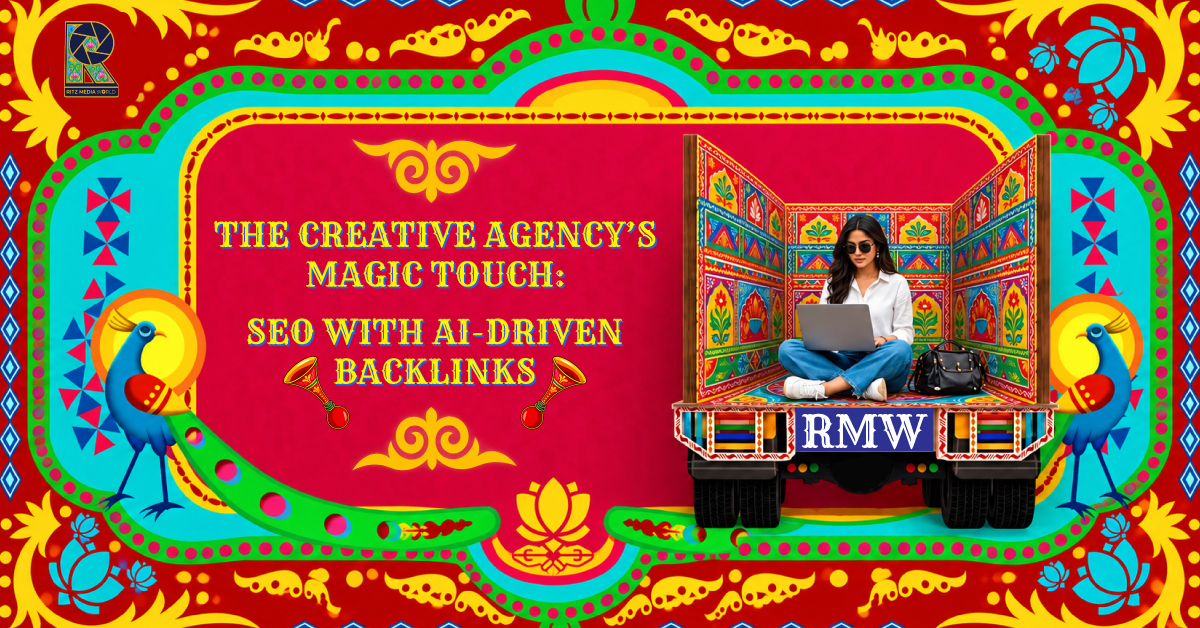
By now, anyone who has worked on getting a site ranking is aware of what is involved in the process. Apart from creating high-quality content, one should ensure that their content is linked to other credible sites, since search engines like to see this proof of credibility too. The only thing that has changed during the past couple of years is the method through which agencies create such links. In today's world, a creative agency takes advantage of artificial intelligence tools for SEO to create backlinks faster than any human team would be able to do alone - but only the clever agencies combine AI speed with traditional editorial expertise, since the E-E-A-T requirements of Google have not become easier.
This post describes the process of doing SEO in the era of artificial intelligence through a creative agency, the significance of backlinks, the use of AI and areas requiring human control.
Reasons Why Creative Agency SEO Is Different Now
A creative agency is not a one-stop-shop SEO service provider; rather, it works on a combination of branding, design, content creation, and website development along with SEO, which is, in turn, a good thing for the agency. There is quite a bit of intersection between branding and SEO. A well-branded website is one that has a distinctive voice and a clear perspective. Such a website generates organic links and mentions much more effectively than an impersonal content hub ever would because people link to brands they recognize and know. For businesses looking to bring these elements together, Ritz Media World offers creative and digital solutions that help build a stronger and more recognizable online presence. It is the reason why the process of building the SEO strategy starts from branding now. Having a well-developed brand provides the necessary input into the algorithms of AI tools used by agencies.How AI-Powered SEO Actually Fits Into the Backlink Process
Now, let's get brutally honest about how AI SEO automation works and how it applies to backlinks. What AI tools can actually do is help with: Identifying appropriate prospects. Rather than spending many hours searching, AI models will be able to go through large quantities of domains and point out those that are thematically linked to a client's niche. Link quality signals analysis. It would be impossible for any human researcher to analyze as much information as domain authority, traffic metrics, spam score, and thematic linking. Pitch email writing. It would be possible to use AI to draft outreach and content angles, which will be later edited by a strategist. Content opportunities identification. AI will be able to conduct a comparative analysis of a client's site and competitors and determine content gaps to cover. While AI tools are unable to ethically engage in such practices as building links out of nowhere or promising rankings, any service provider that assures its clients about getting their pages into the top ten overnight using automated link-building is questionable. The official stance of Google on this issue states that links created at scale for the purpose of manipulating rankings and not for the quality of the content itself will lead to penalties, not success.E-E-A-T: The Criteria That Will Truly Define the Effectiveness of Backlinks
Speaking about backlinks in 2026, you just can't escape from talking about E-E-A-T. E-E-A-T is the abbreviation for Experience, Expertise, Authoritativeness, and Trustworthiness. This is the criteria by which Google's quality raters rate sites. It is not an official algorithmic rating system, but still it impacts the ranking of search results via many different signals. Here's how each piece connects back to backlinks and AI-assisted SEO work: Google increasingly rewards content that shows firsthand involvement with a topic - original photos, documented processes, and real examples - rather than content that reads like a well-organized summary. This matters because AI can help you research a topic, but it can't hand you lived experience. That still has to come from the client, the agency team, or real case studies. This is about demonstrated knowledge - author bios, credentials, and a track record in the subject. A creative agency's value here is pairing subject-matter input from real strategists with AI's ability to organize and structure that knowledge efficiently. Quality backlinks from topically relevant domains, mentions in industry publications, and properly marked external links all feed into authoritativeness. This is exactly where AI-assisted prospecting earns its keep - finding the right relevant domains rather than any domain willing to sell a link. Basics like HTTPS, a clear privacy policy, visible contact information, and a transparent editorial process with correction policies all signal trust - none of which AI can fake convincingly for long. However, artificial bios or artificial backlinks will eventually fail; once you've lost that trust with search engines, it's hard to win it back.Experience
Expertise
Authoritativeness
Trustworthiness
Then again, Are Backlinks Still Worth Pursuing in 2026?
To be honest, yes, although the rules have changed. Backlinks haven't been killed by Google; they've merely become smart, with Google's algorithms making everyone move in a direction of quality rather than quantity. In today's world, algorithms comprehend semantic meaning rather than counting keywords, which means that one backlink from a truly relevant source is better than dozens of artificial links. There's also a newer dimension to consider: generative search. As AI Overviews and other generative answer engines become a bigger part of how people search, pages with strong, contextually relevant backlinks are more likely to be selected as trusted sources for AI-generated answers. It is a very valid reason for an agency with creative capabilities to maintain backlinking on its roadmap while the search habits change; this is because it is not simply a case of achieving higher rankings for the blue link; it is becoming a citation of credibility. On the other hand, it might be useful to know that well researched and authoritative content with detailed answers can rank high on queries with little competition even without many backlinks, since AI-powered searches also take into account structural and topic relevance from the actual pages. This is not an excuse to avoid link building; it is just the recognition of the importance of backlinks as part of a larger effort. Agencies that do it right use AI technology to conduct research and increase efficiency, rather than automate the process. The process usually goes something like this: Brand and audience clarity first. Before chasing links, define what the brand stands for and who it's trying to reach - this shapes every later decision. AI-assisted research. Use AI tools to identify topic gaps, relevant publications, and realistic link opportunities based on actual relevance, not just domain metrics. Human-vetted outreach. Every prospective link partner gets reviewed for relevance and reputation before any outreach goes out - AI drafts, humans decide. Original, experience-backed content. Case studies, data, and creative work samples that give other sites a genuine reason to link back. Ongoing monitoring. Regularly checking which links are actually helping, disavowing anything spammy, and refreshing content so it stays accurate - a core piece of maintaining E-E-A-T over time. This is a slower, more deliberate approach than "automated backlinks at scale," but it's the one that holds up across algorithm updates instead of getting wiped out by them. AI truly has shifted the game when it comes to how an advertising firm tackles SEO - it makes things faster, it targets more precisely and gives people the ability to find better link opportunities more quickly. But it hasn’t shifted the fundamentals of ranking - knowledge, experience and links that exist not because other credible websites have been compelled to include yours through some sort of gimmickry but because your material has been found to be worthy of citation. For businesses looking to combine AI-driven SEO with proven strategies and human expertise, choosing the best SEO agency in Noida can make a meaningful difference in building sustainable search visibility. Those firms which rely solely on automation will be those which are left in the dust in the next core update. Yes, because the relevancy and quality of backlinks matter more than their quantity, plus, strong backlinks allow content to be cited by AI in its answers to search queries. AI can significantly accelerate the process of researching prospects, conducting research, and writing emails, but there is no way to build links sustainably without human oversight due to potential manipulative practices. The acronym for Experience, Expertise, Authoritativeness, and Trustworthiness - it is a way how Google evaluates content and backlinks on the web and decides on their ranking worth. It will not affect it because E-E-A-T depends on the human oversight of the content generated with AI. Branding leads to an increased amount of backlinks and mentions organically, as users remember the brand rather than the page ranked. Yes, in topics of low competition, as long as the content shows high-level experience on the topic.How Creative Agencies Use AI for SEO Without Cutting Corners
Conclusion
FAQs
Backlinks: Do They Still Play a Role in SEO in 2026?
Is It Possible to Build Backlinks via Automated AI Tools?
What is E-E-A-T and Why Does It Matter for Agencies?
How Can AI Content Negatively Impact the E-E-A-T Rating?
What is the relationship between branding and SEO performance?
Can a site rank well without many backlinks?