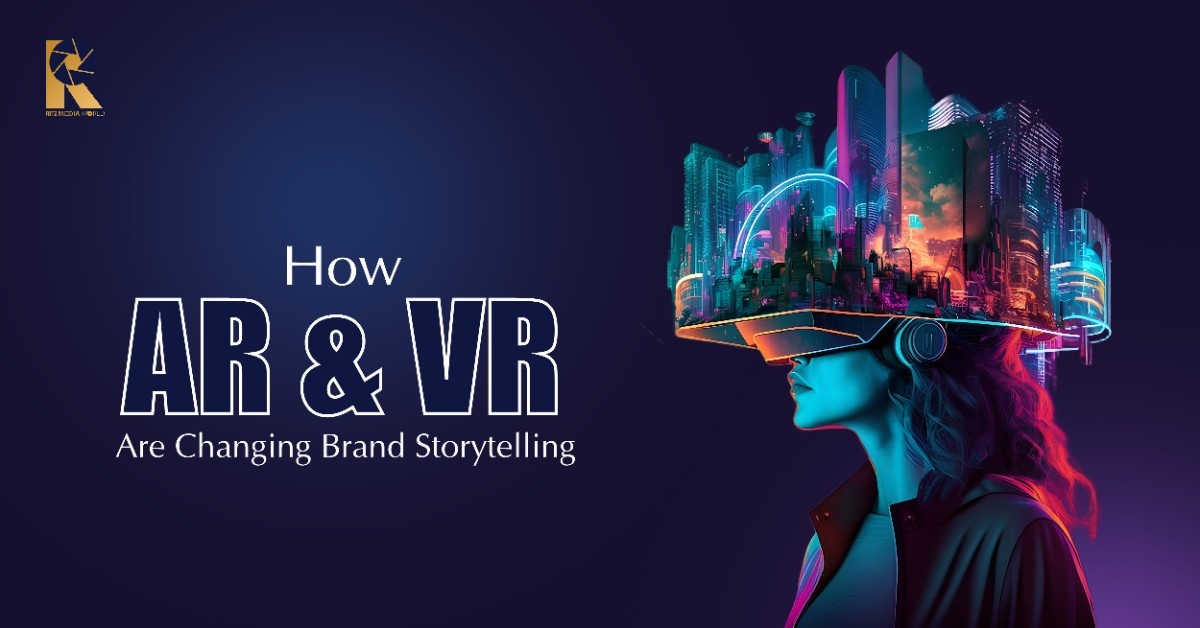
In the modern world of communication driven by fast technologies, it has become harder than ever to get your audience to pay attention. The conventional forms of advertising turn into radio speak, leaflets in the forests of unlimited content. Now, it is where the virtual reality (VR) and Augmented Reality (AR) are coming in as game changers. It is not merely that layers of creativity are being added through these technologies; it is that they are entirely changing the manner in which brands are being told, their old passive audience turned into an active participant.
Watching to Experiencing Stories
Storytelling is a centuries-old marketing concept that involves watching or reading. In AR and VR, individuals are now able to enter the tale. VR involves entirely engaging experiences because it transports users into the virtual world of a brand. Think about putting on a VR device and touring a high-end hotel room before booking your room.
AR, in its turn, imposes the digital contents onto the actuality. Imagine having the ability to instantly view the appearance of a new sofa by simply pointing your phone camera at a blank living room. This consumption versus immersion helps to make a story memorable and emotional, something fixed media cannot do.
Personalization on a New Scale
Interactivity is considered one of the strongest features of AR and VR storytelling. Consumers can now create their own brand experiences in place of a general ad that fits all.
One example includes Nike testing AR filters on social sites where users are creating sneakers in real time. Cosmetics companies such as L’Oreal enable consumers to test makeup virtually with the help of AR apps. This not only makes it fun but also creates greater trust, since people also see products based on them, rather than just on a model.
A Higher Level of Emotional Engagement
Excellent narrations are always emotional. Specifically, VR has already become a potent means of developing empathy-driven stories. Charity organisations have also taken advantage of VR movies to demonstrate to donors the lives of needy people.
In such cases as Charity: Water, viewers were brought to a child sourcing clean water in Ethiopia. The result? Donations shot up, as no one was simply hearing about the cause, they were feeling it. Emotionally connected audiences do not simply purchase products, but they invest in the values of the brand.
Limitless Creative Opportunities
AR and VR help to break the constraints of linear storytelling in an advertisement. Brands have an opportunity to develop gamified experiences, interactive moments, or even a computerized character that comes alive via a camera lens.
Coca-Cola tried AR-powered cans that could display an animated story when a phone was scanned. AR-driven Snapchat and Instagram filters are assisting brands in reaching out to younger generations in a way that feels fun, shareable, and interactive. This innovation renders brand interactions interesting and excitement is all in the era of short attention span.
The Road Ahead: The Future of Storytelling
In the future, AR and VR will be embraced even more: Mixed Reality will introduce even more events by integrating AR and VR. The development of the metaverse will enable brands to create continuous virtual realms in which clients can engage with products, events, and communities.
Real-time personalization powered by AI will make sure that the different immersive stories are adjusted to the preferences and needs of the user.
Final Thoughts
AR and VR are not some technological fads. They are redefining the principles of brand narrative, making it more engaging, two-way, and emotional than it has ever been. The tools enable brands to become unique in a saturated market and create authentic relationships by making consumers participants.
AR and VR make brands able to use the power of crafting something people don't merely recall, but become a part of.
FAQs
1. What is the
real impact of AR and VR on me as a customer?
AR and VR enable you to participate
in the story, rather than only to watch. So, you can virtually try on clothes,
visit a hotel and tour its rooms before you make a reservation, or virtually
move a sofa, particular to your living room, to see how it fits in there
instead.
2. Why do individuals
love the AR filters and VR experiences?
They are entertaining, engaging, and personal.
This is unlike a regular ad because AR and VR will enable you to play, explore,
and interact with brands in a manner that is exciting and entertaining.
3. Will AR and VR be
able to shape my purchase decisions?
Yes, absolutely. Assuming something about you or playing it virtually
causes trust and lowered doubt. That is why there are more people who are more
certain about making a purchase after a trial of AR or VR.
4. Do I require costly
devices in order to use AR and VR?
Not always. Although VR headsets have the ability to bring a new world
within the device, the majority of AR applications can be used on your phone,
either by app, as a filter, or even through built-in camera elements, making
them flexible and inexpensive.
5. In what ways can AR
and VR help me feel more attached to a brand?
They do not just sell products but they
provide experiences and feelings. When you engage with a brand story, it is
remembered, but more than that, you become part of it, and a stronger trust and
a stronger allegiance is formed.