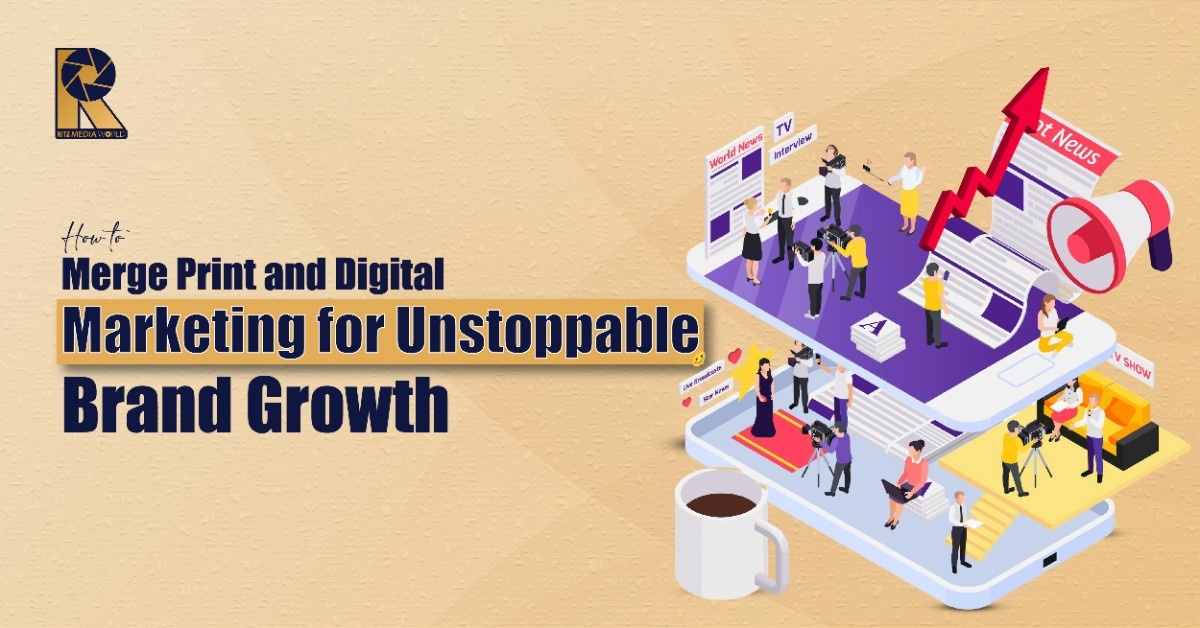
The current advertising landscape is rapidly evolving, and companies can no longer decide between print and digital; rather, they are integrating the two. The strength of integration of print and online marketing is in the fact that the two platforms are complementary, and they are used to reach the target audiences both online and offline. Digital platforms are effective because they reach a wide audience and can be used in real-time, whereas print is more authentic and trusted and has a tangible connection. Their combination results in a marketing strategy that is not only up-to-date but also unforgettable, which all brands aspiring to be memorable have to have in 2025.
Realising the necessity of Integration
The most significant opportunity for integrating print and digital marketing is to achieve the creation of consistent brand awareness. Digital media such as social media, websites and emails enable you to reach huge volumes of people, whereas print provides your brand with credibility and physical presence. When these two align, they complement one another, e.g. a print advertisement containing a QR code that directs to a landing page not only brings about greater engagement, but also monitors measurable outcomes. This is what a powerful omnichannel marketing strategy 2025 is all about.
Print to Drive Digital Traffic
The print media can be a great entry point to your online presence. Brochures, flyers, or posters can contain QR codes, social media accounts, and custom URLs. Once a person scans a QR code on your printed advertisement, they will automatically be linked to your brand online, whether it is your site, Instagram profile, or a particular campaign. This connection between offline and online experience creates smooth interaction and assists in creating quality leads.
Ensuring Brand Consistency
Consistency is a key to successful integration of print and digital marketing. All platforms should resemble your brand logo, colours, fonts, and message. A customer needs to identify your brand at a glance, whether he or she is going through your brochure or visiting your site. This identity remains steady, increases trust and makes your marketing stay consistent, which is crucial in the customer experience of multiple touchpoints.
Using Cross-Promotion to Engage Customers
Print and online can collaborate to increase customer interest. As an example, you may print out some coupons or invitations to events that will motivate people to visit your internet site or to be informed about the events by following your social pages. On the other hand, your email newsletters will be able to market a tangible event or print catalogue. Such cross-promotional strategies boost brand recognition and make the experience of the customers more interactive.
The Effect of Your Hybrid Campaign
The beauty of modern technology is that even print campaigns are now tracked. Unique QR codes, UTM links and customised landing pages can help businesses determine the effectiveness of print in driving digital traffic. Such analytics will enable marketers to optimise their omnichannel marketing strategy and make budgets more effective to ensure that they have maximum returns on investment.
Customer Experience and Personalization
Marketing is becoming personalised. Having the data generated by online campaigns, businesses will be able to produce custom print materials that will meet the preferences of the customers. The example of a direct mail flyer with the emphasis on the same product that a user has just seen on the Internet will result in increased rates of conversions, as the emotional appeal (the use of print) would be combined with the exact targeting (the use of the Internet).
Conclusion
In 2025, marketing will not be successful by either picking print or digital, but by the way both have been smartly merged. An effective print and online marketing mash-up provides brands with the credibility of print and the versatility of online. It enables customised, quantifiable, and standardised brand experiences in all channels.
Through this omnichannel marketing strategy 2025, companies will be able to establish themselves in a competitive market, reach their audiences on a more personal level, and grow in the long term.
FAQs
Q1 Why should print and
digital marketing be combined?
A fusion of print and digital marketing will enable the brands to target both online and offline audiences. Whereas digital media aids in connecting you instantly plus measuring performance, print develops credibility and presence of a brand. The integration will establish an integrated experience that increases brand recognition and participation.
Q2 In what ways can print media generate digital participation?
QR codes, social media handles or personalised URLs may be added to print materials such as brochures, flyers and posters. By scanning or visiting these links, the user is redirected to digital platforms like websites or social media platforms, which form a smooth interrelation between the offline and online mediums.
Q3 What is the significance of brand consistency in integrated marketing?
Regularly using the same logos, colours, fonts, and message of both print and digital platforms allows the customers to immediately identify your brand. This consistency will create credibility and make sure your audience feels that the brand identity remains consistent on all marketing platforms.
Q4 How can print and online cross-promotion be done?
A firm can mail out printed coupons, which have an online purchase or event invitations, in direct mail, which will entice users to subscribe to a site. Equally, email can be used to advertise hardcopy catalogues or physical-copy-only deals- reinforcing the interaction with the customer in both mediums.
Q5 What is the success of print and digital integration, and how can it be measured by businesses?
Businesses can use technologies such as QR codes, UTM parameters and custom landing pages to trace the number of individuals who make the transition between the print and digital mediums. Such analytics will show what is performing and assist the brands to better match their omnichannel marketing approaches to maximise ROI.