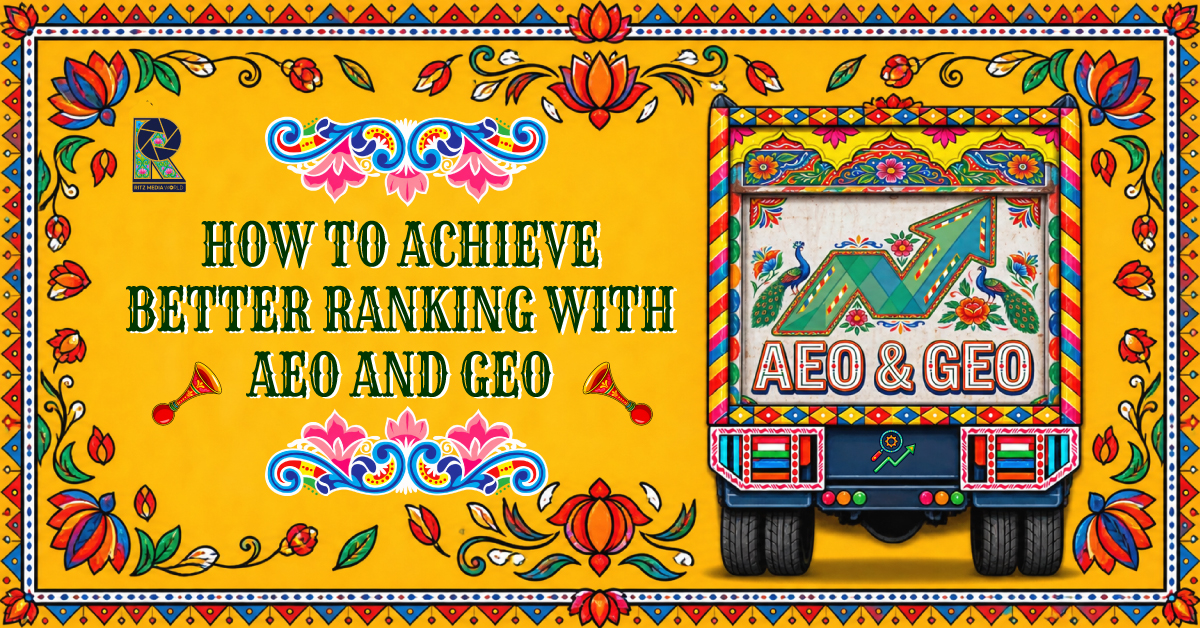
But ranking blue links on SERPs is not what search is anymore. With the AI Overviews from Google, ChatGPT search engine, Perplexity, and Gemini, an increasing number of your readers never make it to your site - the answer to their query is delivered within the search itself. That's where the importance of AEO (answer engine optimization) and GEO (generative engine optimization) comes in; it's equally important as good SEO.
But if you focus solely on good rankings on Google, you're focusing on only half of the picture. In this guide, we'll explore what AEO and GEO actually are, how they work together with SEO, and how to start ranking higher in searches today.
A successful AI search strategy combines Answer Engine Optimization with Generative Engine Optimization while maintaining strong SEO fundamentals. Understanding the role of AEO and GEO in SEO helps businesses build a more comprehensive and future-ready digital presence.
What Is AEO (Answer Engine Optimization)?
Answer Engine Optimization is the process through which you structure your content in such a way that it can be pulled out and used as a direct answer - through featured snippets, 'People Also Ask' snippets, voice assistant answers, and Google's AI Overviews. Rather than create content that needs to be clicked on to understand the complete answer, AEO content provides the answer immediately, and then explains it further below.
The basic concept of AEO is 'extractibility.' The search engines and AI systems look for content that provides a clear and concise answer to the particular query being asked. If your content has an answer buried three paragraphs down into thick text, it becomes much harder for the algorithm to pull that answer out.
What Is GEO (Generative Engine Optimization)?
Generative Engine Optimization takes this process a step further. While AEO deals with the extraction of content you already have, GEO deals with the mention or citation of your brand in case an AI model creates an entirely new and synthesized answer based on several different sources.
It’s a very different skill. Large language models such as ChatGPT, Claude, and Gemini don’t simply look for a certain keyword - they make sure that the sources seem credible enough to be referenced. Content with actual expert quotes and statistics is cited much more often than content that is obviously created with only SEO in mind. And keyword-packed pages, especially, will perform poorly compared to others.
Why SEO, AEO, and GEO Need to Work Together
However, one might consider them to be three distinct strategies, but it actually involves the following:
SEO lays the groundwork - site speed, mobile responsiveness, backlinks, and proper keyword targeting on pages.
AEO uses this groundwork and provides proper structure for getting an answer.
GEO, in turn, adds trust indicators to this, so that AI algorithms feel confident enough to provide you with citations by name.
It's very hard to skip SEO part and move directly to GEO, since the engines that use the generative technology still use the same principles of crawling, indexing, and determining authority signals that are applied in traditional search.
As AI-powered search continues to evolve, businesses that invest in the right optimization strategies will gain a competitive advantage. Discover Digital Marketing Services to improve visibility across both traditional search engines and AI-driven platforms.
How To Enhance AEO & GEO Rankings
1. Focus On Questions
Begin by listing down the relevant questions that your target audience might be asking. You may use Google's People Also Ask, AnswerThePublic.com, and auto-suggestions; however, you may go a step ahead by testing questions within ChatGPT and Perplexity, which will tell you what type of question triggers answers from the AI assistants. Long tail and conversational questions are easier to rank in AEO & GEO, as these are similar to what people ask their AI assistants.
2. Optimize The Structure Of Content
Once you have the question, provide an immediate response. Generally, an effective AEO page is created in this format: a clearly framed H2 or H3 in the form of a question, followed by a two to three-sentence long answer, and then followed by more detailed content.
Schema Markup such as FAQ schema and How-To schema also emphasizes the need for this structure in a technical way. Though having this won't ensure an AI citation alone, it will definitely increase your chances of getting rich results and make your page intent clearer to the search engine and AI bot.
3. Establish Entity and Topical Authority
Search algorithms and AI bots today are more inclined to think in terms of entities such as brands, individuals, products, and topics rather than individual keywords. To establish topical authority, one must cover different angles of a topic and connect them internally to form a relationship in search engines or AI bot's eyes.
Herein lies the weakness of most websites. Instead of establishing a cluster of content that establishes their authority about a particular topic, many websites are focused only on individual keyword targets. In the long run, a website with ten disconnected pages will lag behind a competitor who has five pages connected with each other.
4. Provide Real Data and Expertise
If you're hoping for your content to be cited within answers generated by AI, then give the model something valuable to cite. This means providing original data, real expert commentary, personal experience, and sources. The approach is aligned with the principles of Google's E-E-A-T, Experience, Expertise, Authoritativeness, and Trustworthiness, and influences not only regular search results but also AI citations.
Don't produce generic and derivative content that's nothing but a rehashing of something that's already ranking. AI crawlers are capable of identifying unoriginal content, and it's one of the quickest ways to get overlooked in favor of some more unique source.
5. Ensure that Crawlers Can Access Your Content
Without being able to actually access your pages, everything above becomes meaningless. Double-check that your robots.txt file isn't unintentionally blocking critical crawlers and that your website doesn't load content exclusively via JavaScript that AI crawlers have issues accessing. Additionally, you'll want to ensure that the retrieving crawlers of AI search engines aren't blocked in case you're aiming to gain visibility in AI-generated answers.
6. Monitor Visibility Beyond Google Rankings
The old approach to ranking is incomplete. It’s a good idea to periodically check visibility by entering target queries yourself into ChatGPT, Perplexity, and Google's AI Overview. It will help you understand whose competition mentions your brand and whose does not - in most cases, it’s a completely different picture from what you see in regular SEO tools.
Common Mistakes to Avoid
Seeing AEO as a way of creating an FAQ page. The structure is more important than the name of the strategy - it should allow you to present an extractable answer.
Pursuing volume and not answerability. High volume keywords, which are vague and generic, might become a worse AEO target than a specific and highly intentful question.
Keyword stuffing. It makes your content harder to read and harms trust signals. It was proved that stuffing doesn’t help in getting citations from generative answers.
Neglecting technical SEO. The fast loading speed, mobile usability, and proper indexing are the foundation for AEO and GEO.
Final Thoughts
To rank better in 2026, brands need to appear in three different ways: classic SERPs, extracted answers, and AI-generated results. SEO will give you the basics. AEO will earn you the extracted answer. And GEO will get you the citation. No one replaces the other because they stack together. The brands that will succeed in the future with search evolution in mind are those that understand AEO and GEO as an extension of good SEO, not a new way to achieve it.
As search continues to evolve with AI-powered experiences, partnering with Ritz Media World ensures your brand stays ahead through advanced SEO, AEO, GEO, and performance-driven digital marketing strategies.
FAQs
How does AEO differ from GEO?
While AEO is about having your existing content extracted as a direct answer in featured snippets, voice search, and AI Overviews, GEO is about having your brand mentioned when an AI system creates a brand-new, synthesized response using multiple sources.
Is there still a place for classic SEO in AI search optimization?
Certainly. As mentioned above, AI search engines utilize many signals that are used by classic SEO, such as crawlability, page speed, and backlinks. If you have bad SEO practices, there is little chance to have good AEO and GEO.
How do I know if my content is optimized for AI answer engines?
Check your target keywords directly using ChatGPT, Perplexity, and Google's AI Overviews and find out if your brand is cited. When your competitors start popping up instead of your brand, then your content probably fails to address the keyword clearly and quickly.
Is it enough just to use FAQ schema for AIO citation?
Absolutely not! Schema markup makes you more eligible for rich results and helps engines comprehend your content, but it is not a guarantee of citation.
How fast will I see the results of AEO and GEO?
SEO usually takes weeks or months depending on the competitiveness of the market and the authority of the website. AEO and GEO visibility could be a little bit quicker because of frequent crawling and content re-generation by the AI systems.
Can a small website compete with big brands in AI search results?
Yes, in some ways more easily than through SEO traditionally, since AI engines tend to prefer concrete, cited information over mere domain authority, allowing a focused smaller site to win at answering over a far larger competitor on a particular topic.
Is it necessary to block AI bots from crawling my website?
Blocking retrieval bots for AI completely eliminates your website from the realm of AI search results. Most websites will want to have access to AI results rather than blocking access to them.