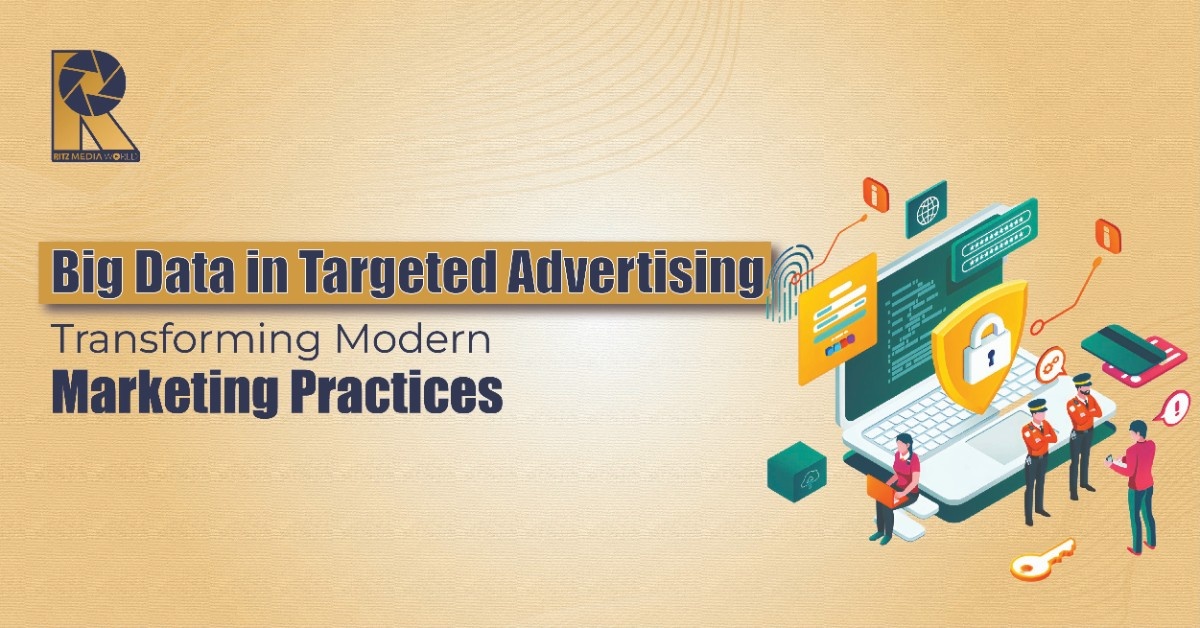
Big Data in Targeted Advertising is, undoubtedly, one of the main pillars of the current marketing strategy in a digital-first world. The data that is collected from the digital environment make it possible for companies to engage with customers in ways that so far, they seemed to be out of their reach. It is precisely this upgrading of the customer engagement process that leads to the birth of more customer-focused, cost-efficient and revenue-driven marketing campaigns that, by their very nature, are delivering the solution to the problem that consumers express through their behaviour.
Understanding the Role of Big Data in Marketing
The Role of Big Data in Marketing is not limited to merely gathering the consumer data. It concerns the finding of significant patterns by analysing vast and varied datasets. These patterns give insights into customer needs, behaviours and decision processes. The Role of Big Data in Marketing is crucial because it is the pillar that supports data-driven marketing which in its turn leaves no room for guesswork in promotional strategies.
Sources of Big Data
How do we get the data for targeted advertising? The answer is that they come from a variety of digital touch points, namely:
Social media usage, Search engine awareness, Website exposure, Purchases and transaction histories, Mobile app usage and location-based data. Each and every action that is performed online, may it be a click, a share or a purchase, generates data that fuel the Big Data in Targeted Advertising. The real challenge, however, is not data collection but their management, analysis, and implementation.
How Data-Driven Advertising Works
Data-Driven Advertising stands for the usage of the data after they have been analysed to steer advertising decisions. It is implied that the consumers are not exposed to the same promotion, instead, the data serve the innovation of more targeted ads to be shown to particular groups or even to single consumers. Data-Driven Advertising works through evaluation of:
Age, gender, location, and interests, User browsing history, Past purchases and Wishlist items, Time spent on particular websites or product pages. Thus, if a user inquires for fitness equipment regularly, it is logical to think she/he will get ads for gym memberships or sports apparel. They're not just lucky—they're targeting advertising data in action.
Personalized Advertising Strategies
As one of the foremost wins of big data analysis is the increase in Personalized Advertising Strategies. These strategies aim directly at tailoring the marketing communication to an individual’s preference. Personalized Advertising Strategies raise the rate of user engagement as they view these ads as more useful and less intrusive. As an example, Netflix suggests shows based on a user's previous streaming habits, and e-commerce platforms recommend products based on past searches. Personalization not only improves the customer experience but also creates a sense of trust between the brand and the customer.
Big Data Marketing Strategies and Real-Time Optimization
It is quite a handful for modern-day companies to sustain their marketing on the edge of success without the use of Big Data Marketing Strategies. A company using these strategies is capable of accomplishing the following tasks:
Identifying the most profitable customer segments, Choosing the correct advertising platforms, setting realistic budgets based on predicted conversion rates, Changing the content of the advertisement in real-time according to user feedback. What gives Big Data Marketing Strategies their amazing feature is the ability to constantly change and evolve. The immediate response is what gives the marketers the power to switch their campaign strategies on the spot. Efficiency is increased, and wasted ad budgets are minimized if the shifts are made swiftly and the wrong design, message, or target group are identified.
Benefits of Big Data in Targeted Advertising
- Higher Marketing ROI: Companies are allowed to spend money solely on the most responsive audience segments.
- Enhanced Customer Experience: Advertising becomes more customer-centric and thus more appealing to users' interests.
- Reduced Advertising Waste: Brands do not lose energy by trying to reach everyone but instead, they concentrate on the high-potential customers that will most likely bring them success.
- Better Market Forecasting: The data give businesses the power to be the first ones to spot the upcoming trends and anticipate consumer needs ahead of their competitors.
Ethical and Privacy Considerations
On the other hand, big data should not be recklessly managed. In order to be able to keep the trust, apart from transparency, securing data storage and not using the consumer information for other purposes are indispensable features that determine whether a company is following ethical principles or not. In addition, the enterprises are obliged to observe the provisions of data protection laws and to inform the users about the ways in which data is utilized.
Wrapping Up
Big Data in Targeted Advertising is a significant factor that changed the communication flow between brands and consumers. By embracing the Role of Big Data in Marketing companies are able to apply Data-Driven Advertising techniques which in turn make their campaigns more precise, interactive, and successful. The use of Personalized Advertising Strategies coupled with the intelligent exploitation of Big Data Marketing Strategies allows companies to reach their audience in an efficient manner, giving them the opportunity to obtain better results while at the same time improving the customer experience. The future of digital marketing will be led by the brands that make the smartest use of data as they keep on increasing.
Frequently Asked Questions (FAQs)
1. How big data targets
ads?
In order to make a prediction about what you will probably buy, big data goes through your online activity that may consist of your searches, clicks, purchases, or even the time that you spend on a page. For instance, if a person looks up running shoes, then the algorithms will display to this person ads for sportswear rather than for some random products.
2. Which data are used for targeted advertising?
The sum total of your online activities:
- What you like or share on social media
- The user’s search history
- The websites visited and the time spent
- Transaction history
- The usage of the app and your location via GPS
Even if you just pause for 10 seconds on a product page, that is enough to trigger a personalized ad.
3. Are targeted ads the same as personalized?
Not quite. Targeted ads are concentrated on specific groups. Personalized ads factor you deeper - presenting the very same hoodie you put in your cart last week, just to you.
4. By using big data, can companies change ads instantly?
Certainly! If a campaign receives fewer clicks, AI at once can change the picture, title, or customers. For instance, if a promo is not doing well at 10 AM, it will be self-optimized at noon - the time between the operation and the human intervention is zero.
5. How does Netflix use big data for recommendations?
Netflix follows what you watch, skip, rewatch, and even the moment when you pause. Based on this information, it comes up with a 75%+ accurate prediction of the shows that you will watch next - thus, the company turns casual viewers into devoted subscribers.
6. Are targeted ads really the reason for sales to go up?
Without a doubt. The research plainly indicates that the implementation of personalized ads can have a result of increasing the conversion rates to be between five and ten times more than before. According to this, brands are not losing money on people who are not interested in their products and at the same time, they are receiving a higher return on investment (ROI) - as a result of data-driven campaigns, some of them reach over 200% in ROI.