Okay so here's a conversation that plays out in basically every marketing meeting on earth. Someone's got a budget approved, everyone's excited, and then the question comes up. Google Ads or Facebook Ads? Which one do we actually run? And every single time, someone in the room says "it depends" and everyone groans because that's not the answer anyone wanted to hear when they've got money burning a hole in the budget sheet. If you're trying to figure out which advertising strategy makes the most sense for your business, Ritz Media World can help you build the right digital marketing and performance marketing approach based on your goals, audience, and budget.
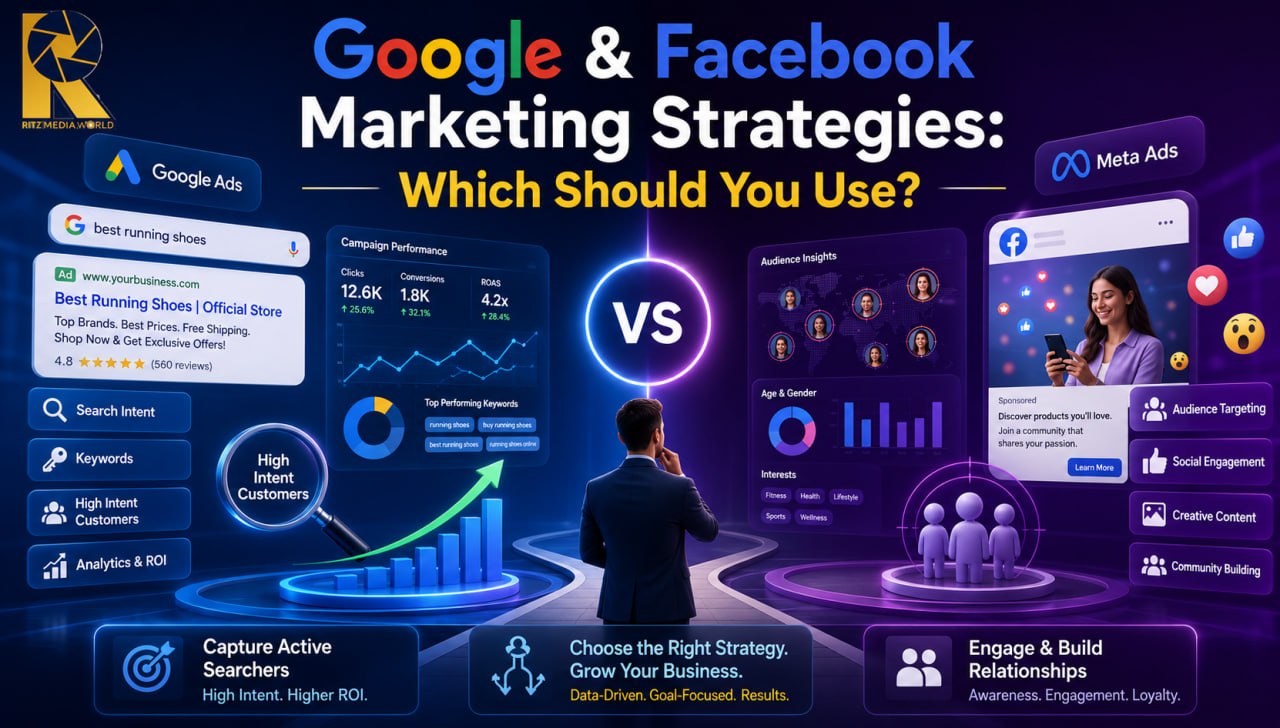
But it genuinely does depend, and I'm not just saying that to dodge the question. Google Ads and Facebook Ads aren't really rivals fighting over the same job. People love to frame it that way because it makes for a punchier blog title, ironic given what I'm writing right now, but in reality they're built for completely different moments in how someone actually decides to buy something. Once you get that, the whole "which one is better" debate kind of falls apart on its own.
Google Ads, Basically Catching People Mid Thought
Here's the thing about Google. Someone types "best plumber near me" or "cheap running shoes online" into that search bar, and in that exact second they're basically raising their hand and telling the internet what they want. That's the entire magic trick behind PPC advertising on Google. You're not butting into someone's day uninvited. You're just... there. Right when they were already looking.
That's exactly why a well built Google Ads campaign tends to crush it for lead generation specifically. Nobody searches "emergency AC repair" at 11pm because they're bored. They've got a broken AC and a problem that needs solving, probably today, maybe in the next hour honestly. Show up with a clear offer, don't make your landing page a nightmare to fill out, and you're already ahead of half the competition who overcomplicate this stuff. If you're looking for the Google Ads Agency in Delhi to help manage and optimize campaigns, it's worth knowing what to look for before putting your budget behind an agency.
Google PPC ads also hand you a scary amount of control if we're being honest. Bid on specific keywords, target within a few kilometres of a location, run ads only during business hours, tweak your budget daily if something's not working. It's precise to the point where some people spend more time fiddling with settings than actually growing the campaign, which, yeah, I've seen that happen more than once.
Where Google kind of struggles though is brand awareness. If literally nobody's searching for what you sell yet, maybe because it's brand new or a weird niche most people don't even know exists, Google just can't help you there. No search volume means no traffic, doesn't matter how clever your ad copy is. You can't capture demand that doesn't exist yet.
Facebook, Or Meta, Whatever You Want To Call It
Facebook works in a completely different universe. Nobody's searching for anything there. They're scrolling. Looking at a cousin's wedding photos, half watching a reel, thumb moving on autopilot. Your ad has to grab attention it wasn't given, not answer a question someone already typed out.
Sounds like a disadvantage right? And honestly sometimes it is. But that's also exactly why a good Facebook advertising strategy can be so powerful for certain goals. Since Facebook doesn't need someone to be actively searching for anything, it's genuinely great at putting your brand in front of people who have literally never heard of you before. That's brand awareness in its rawest form. You're not harvesting demand, you're planting it.
Facebook marketing for businesses really works best when you've got something that looks good, honestly, something scroll stopping. Clothing, food, home stuff, fitness programs, anything visual. And the targeting? Genuinely impressive. Interests, behaviours, age, income in some places, even lookalike audiences built off your existing customer list. That lookalike feature is underrated by the way, most people barely use it properly. Feed it your best customers and it'll go hunt down more people who behave the same way online.
Downside, intent is basically nonexistent at first click. Someone scrolling past your ad isn't in "ready to buy" mode the way a Google searcher usually is. Doesn't mean Facebook can't drive sales, it absolutely does, it just takes more touchpoints, more retargeting, a bit more patience honestly before someone actually converts.
Money Talk, Costs And Conversions
Cost per click on Google runs higher usually, sometimes painfully higher depending on the industry, legal and insurance keywords especially can get ridiculous. But since the traffic already has intent behind it, conversion rates often make up for the higher spend. You're paying more per click but you're standing closer to the actual sale.
Facebook clicks tend to be cheaper on average, but conversion optimization looks different here. You're not just chasing that first click into an instant sale. A big chunk of Facebook's value shows up later, through retargeting, someone sees your ad, visits the site, doesn't buy, gets nudged again a few days later with a slightly different message or offer. Do that enough times across enough people and a good number eventually convert, just not on that first pass.
This is honestly where a lot of businesses trip up their whole online marketing strategy. They judge Facebook the exact same way they'd judge Google, first click or bust, and when that doesn't happen right away they decide Facebook "doesn't work for them." It's just a different game with a different clock. Treating it like Google with prettier pictures usually ends in disappointment, and I've watched that exact mistake play out way too many times.
So Which One Do You Actually Pick
Real answer? If your budget allows it, run both. Genuinely. Most bigger brands don't choose one, they layer them together. But if you have to pick a starting point, here's a rough, no nonsense way to think about it.
If people are already searching for whatever it is you sell, plumbers, lawyers, ecommerce products where demand clearly exists, established categories basically, lean Google first. You'll grab demand that's already out there instead of trying to manufacture it from nothing.
If you're launching something new, building a brand basically from zero, or selling something that leans heavily visual, lean Facebook. You're not competing for search demand because barely any exists yet. You're creating interest where none currently lives.
Honestly some of the smartest marketing campaigns I've come across use both, one feeding the other. Facebook builds that initial awareness, puts your brand in front of the right people. Then later, those same people start searching your brand name or something related on Google, and boom, you catch them there with a search ad ready to close things out. It's less "pick a favourite" and more understanding where your customer actually sits in their own head at that moment.
Stuff People Constantly Get Wrong With Both
Number one mistake, and I mean constantly, people launch a campaign, let it run for like three days, and declare it dead or a genius success based on basically no data at all. Both platforms need time to figure things out, Facebook especially, since its whole algorithm depends on learning who actually converts over time. Pull the plug too early and you just wasted whatever learning already happened.
Second thing, ignoring the landing page completely. Doesn't matter how flawless your Google Ads campaign is, tightest keywords, sharpest copy, none of it saves you if the page someone lands on is slow, cluttered, or demands their life story before they can even see what you're offering.
And people massively underrate how much creative matters on Facebook specifically. Perfect targeting, generous budget, whatever, if the actual photo or video doesn't stop someone's thumb mid scroll, none of the rest of it matters. Facebook's a visual platform first, an ad platform second, and forgetting that shows up in the results every single time.
Final Thoughts
There isn't some universal winner between Google Ads and Facebook Ads, and honestly if someone tells you there's one clear answer they're probably about to sell you a course. Google captures demand that already exists. Facebook creates demand that isn't there yet. Both are genuinely solid digital advertising platforms, just built for very different jobs on the same overall mission of getting your business in front of actual humans who might buy something.
Figure out where your customers actually are in their own journey first. Are they searching for you already, or scrolling past without knowing you exist yet? That answer honestly tells you more than any generic marketing advice ever will. And if the budget's there, don't force yourself into picking a side. Run both, pay attention to what each one teaches you about your audience, and build something around what each platform actually does well instead of what sounds good in theory.